

Laboratory Weighing Equipment – Precision Balances & Analytical Scales for Scientific Applications
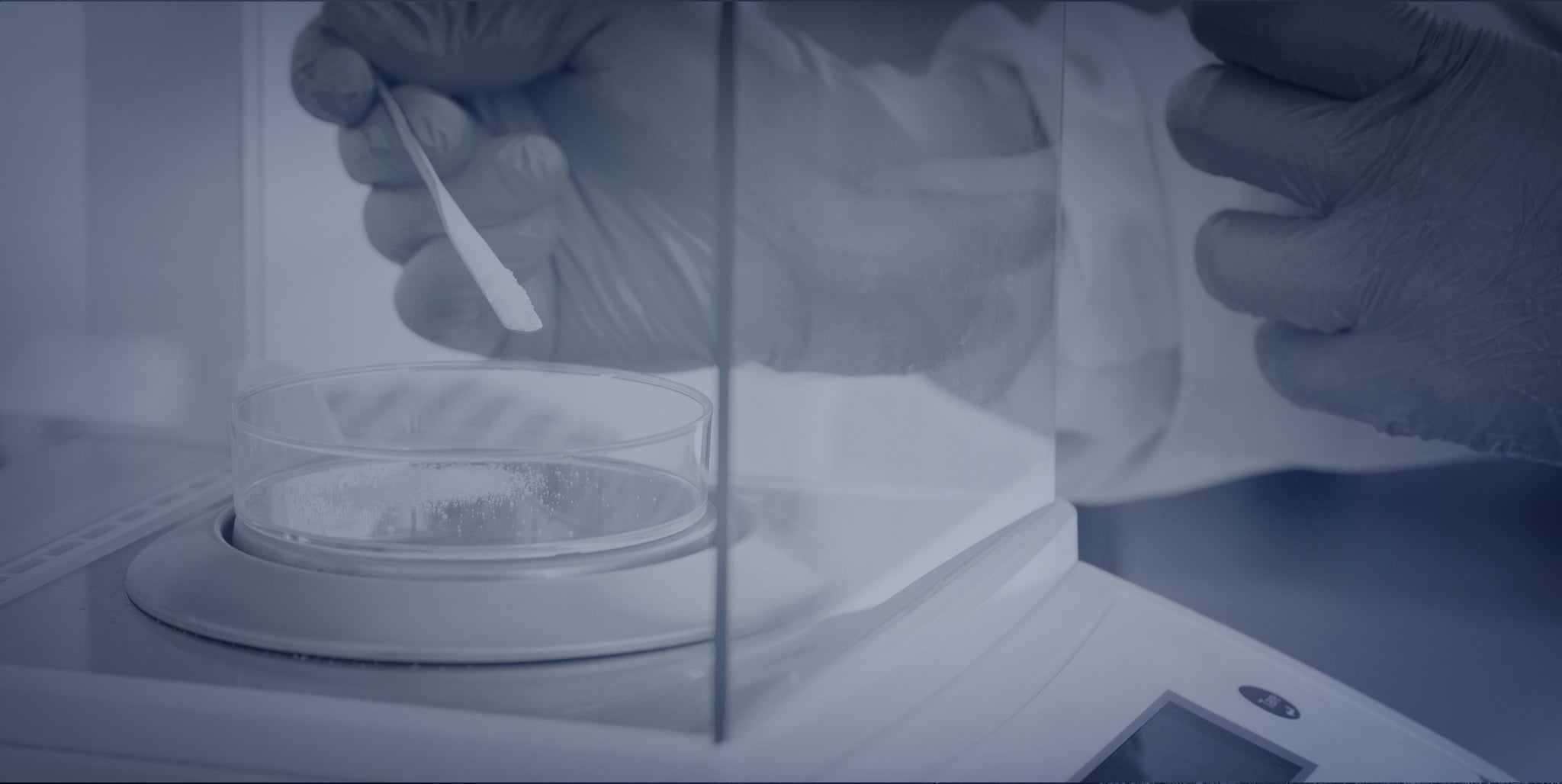
Our laboratory weighing range covers the full spectrum of precision measurement instruments required in scientific research, pharmaceutical development, quality control, and analytical chemistry — from high-capacity precision balances for general laboratory use through to analytical balances, semi-micro balances, and microbalances for the most demanding high-resolution applications. Every instrument in our range is selected for accuracy, repeatability, and long-term stability, ensuring your measurement data is reliable whether you are weighing bulk samples or microgram quantities.
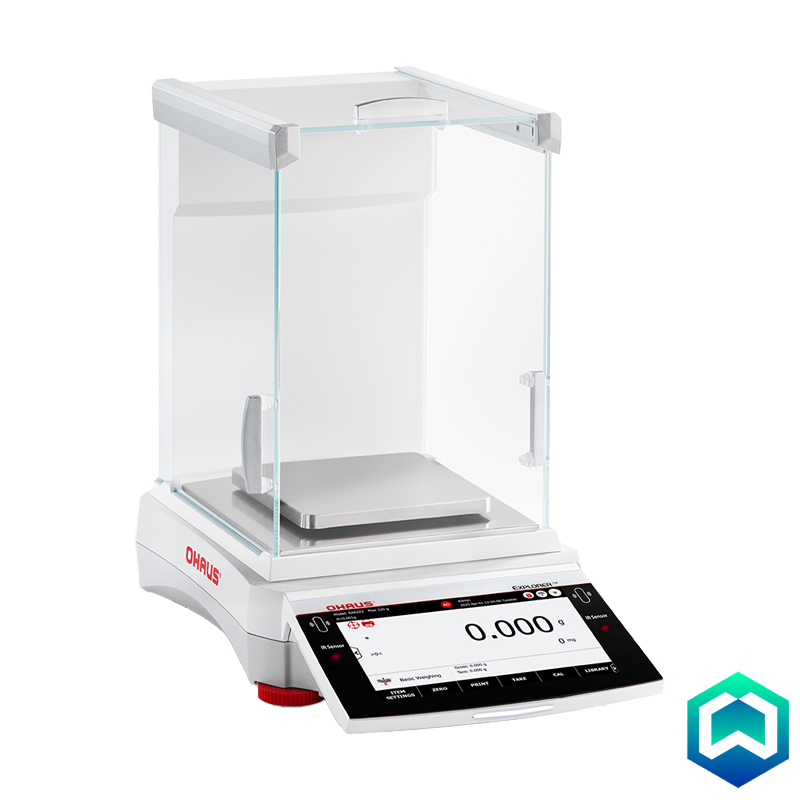
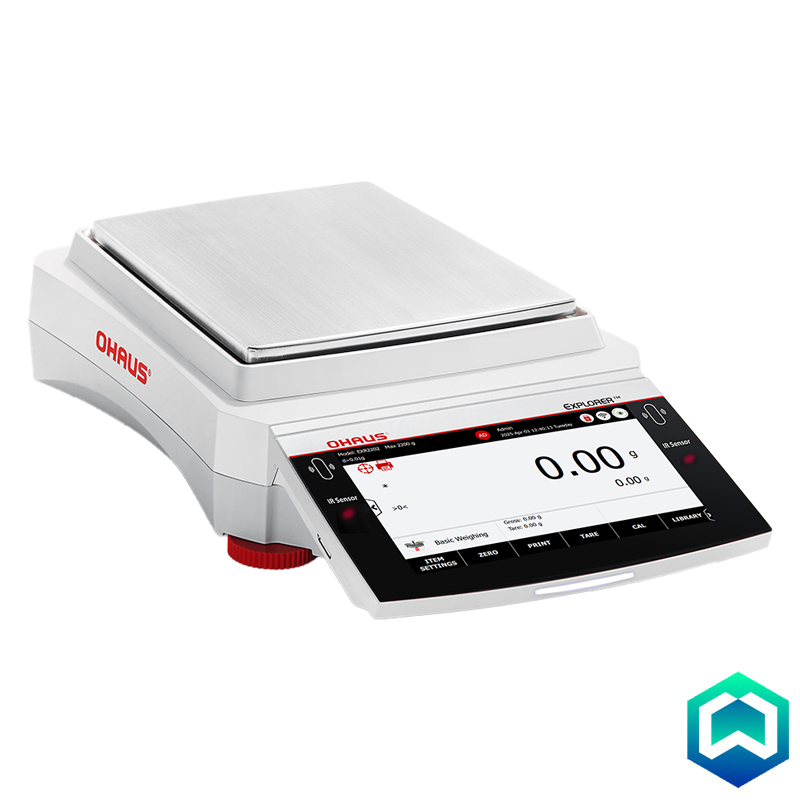
Laboratory balances are not interchangeable — the right instrument depends on the resolution you need, the capacity required, and the environment in which it will be used. A precision balance with 0.01 g readability is the right tool for general sample preparation and formulation; an analytical balance at 0.1 mg is required for gravimetric analysis and reference standard preparation; a semi-micro balance at 0.01 mg is needed where analytical balance resolution is insufficient. Our range also includes moisture analysers for rapid water content determination, and density determination kits for specific gravity measurement — extending the capability of your balance beyond simple weighing.
All laboratory balances in our range are available with UKAS-traceable calibration certificates on request, and most models include GLP/GMP compliance features — audit trail, user management, and method documentation — for regulated pharmaceutical, food, and industrial laboratory environments. Our technical team can advise on instrument selection, environmental requirements, and calibration and service support for your specific application.
Laboratory Weighing Instruments Available
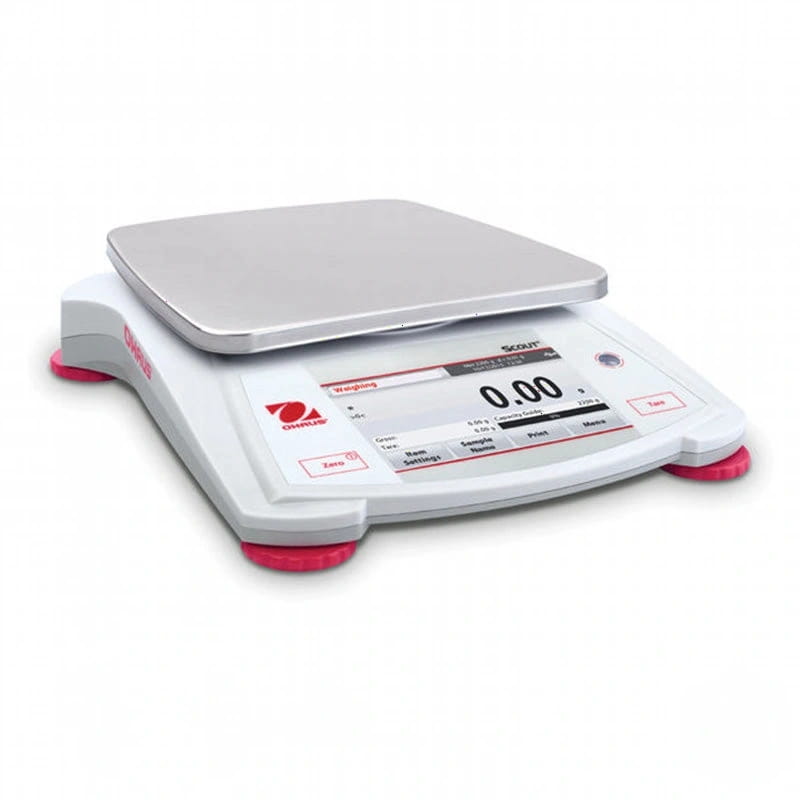
- Precision balances — 0.01 g to 0.1 g readability for general laboratory weighing, formulation, and sample preparation
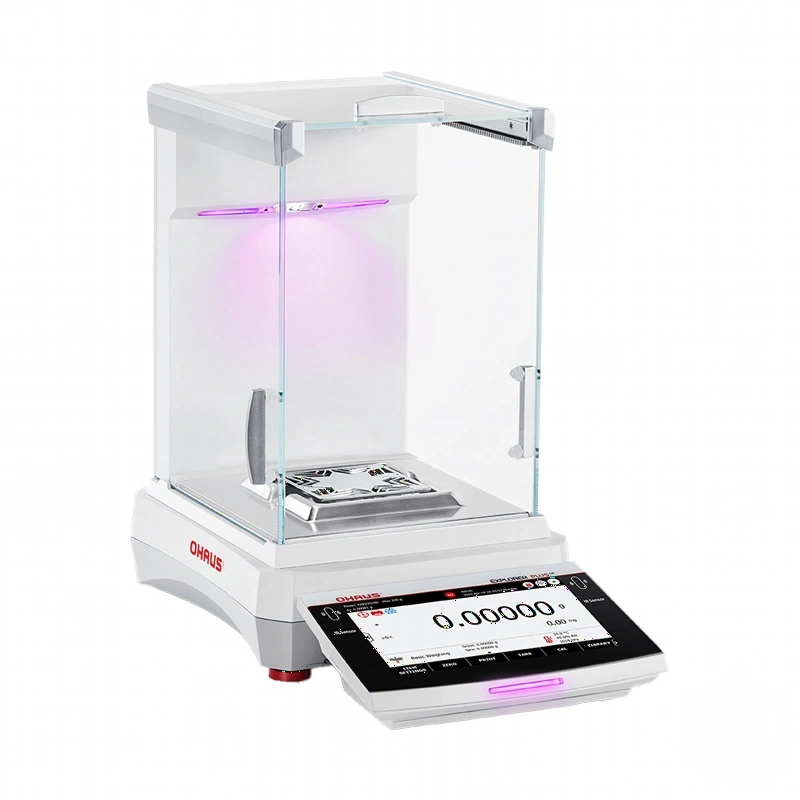
- Analytical balances — 0.1 mg readability for gravimetric analysis, reference standard preparation, and quality control
- Semi-micro balances — 0.01 mg readability for high-resolution pharmaceutical and analytical chemistry applications
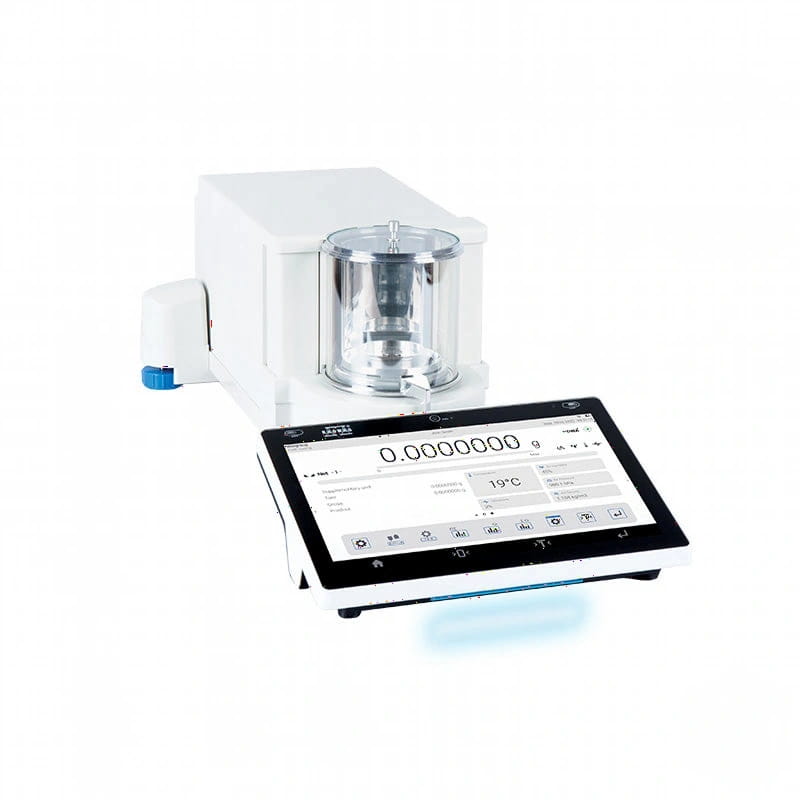
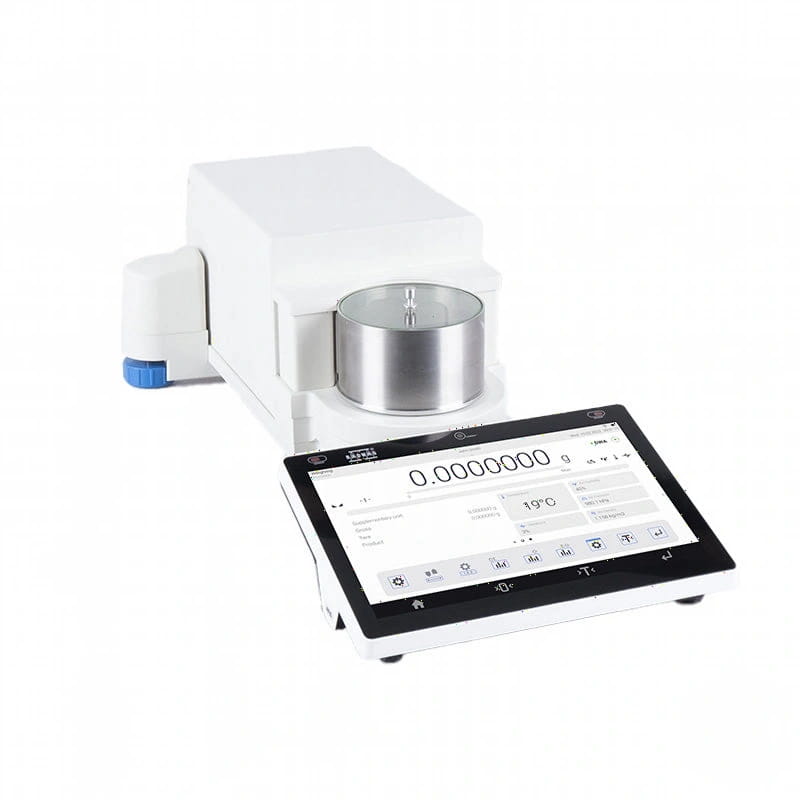
- Microbalances — 0.001 mg readability for ultra-trace weighing in research and metrology
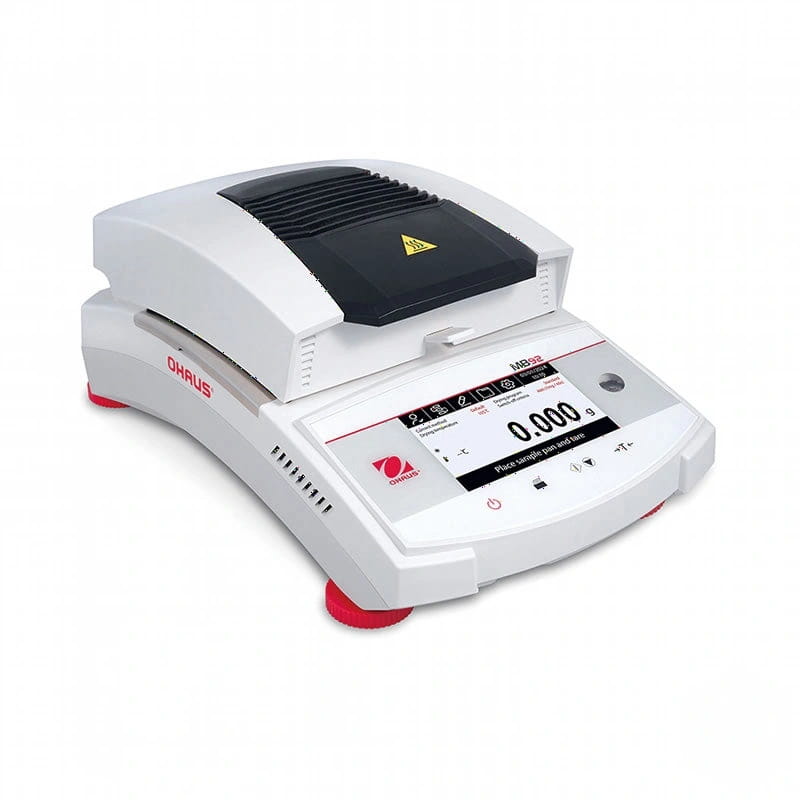
- Moisture analysers — rapid halogen or infrared drying for water content determination in production and QC
- Density determination kits — specific gravity measurement using the Archimedes principle with a standard balance
Key Features
- Automatic internal calibration with motorised reference weights for continuous accuracy without operator intervention
- Draft shields and anti-vibration systems for stable readings in real laboratory conditions
- GLP/GMP compliance features — audit trail, user login, and method-guided weighing for regulated environments
- RS-232, USB, and Ethernet connectivity for LIMS, data logging, and label printer integration
- Touchscreen and backlit LCD displays with intuitive menu navigation and multiple weighing modes
- Stainless steel pans and easy-clean construction for hygienic laboratory use
- UKAS-traceable calibration certificates available on request for all instruments
Common Applications
- Pharmaceutical research and development — API weighing, formulation, and reference standard preparation
- Analytical chemistry — gravimetric analysis, sample preparation, and trace analysis
- Quality control — incoming goods inspection, batch release testing, and compliance verification
- Food and beverage — recipe formulation, moisture content analysis, and nutritional testing
- Environmental and water testing — filter weighing, residue analysis, and gravimetric determination
- Educational and research institutions — teaching laboratories and scientific research
- Industrial QC — parts weighing, density determination, and production quality assurance
All instruments are sourced from leading laboratory balance manufacturers and are available with full calibration and compliance documentation. Contact our technical team for advice on selecting the right balance for your application, resolution requirements, and regulatory environment.
Frequently Asked Questions
What readability do I need for my laboratory balance?
Readability (also called division or d) is the smallest increment the balance can display. As a general rule: 0.01 g (precision balance) for general sample preparation, formulation, and routine weighing; 0.1 mg (analytical balance) for gravimetric analysis, reference standard preparation, and pharmaceutical QC; 0.01 mg (semi-micro balance) for high-resolution pharmaceutical research and trace analysis; 0.001 mg (microbalance) for ultra-trace and metrology applications. Always select a balance with a capacity comfortably above your maximum sample weight — contact our team if you are unsure which readability is appropriate for your application.
What is automatic internal calibration and why does it matter?
Automatic internal calibration uses a motorised reference weight built into the balance to perform a calibration check and correction automatically — typically triggered by temperature change or at set time intervals. This ensures the balance self-corrects for temperature drift throughout the working day without operator intervention, maintaining accuracy and reducing the risk of measurement errors caused by environmental changes. For regulated laboratory environments, automatic internal calibration also simplifies compliance by providing a continuous calibration record without manual calibration steps.
Do laboratory balances comply with GLP and GMP requirements?
Yes. Most analytical and semi-micro balances in our range include GLP/GMP compliance features including date/time stamping, user login and access management, audit trail logging, and method-guided weighing workflows. Full IQ/OQ/PQ validation documentation is available on request for pharmaceutical and regulated laboratory environments. Contact us to confirm the compliance features available on specific models and to discuss validation support.
What environmental conditions do I need for accurate balance readings?
Laboratory balances — particularly analytical and semi-micro models — require a stable, vibration-free surface, a draught-free and temperature-stable environment, and protection from electrostatic charge. Avoid siting near air conditioning vents, doors, windows, or high-traffic areas. Allow the balance to warm up for at least 30 minutes before use, and allow samples and containers to equilibrate to room temperature before weighing. For semi-micro and microbalances, an anti-vibration table and ioniser are strongly recommended.
Can I get a UKAS calibration certificate with my laboratory balance?
Yes. UKAS-traceable calibration certificates are available on request for all balances in our range. Annual recalibration by a qualified service engineer is strongly recommended to maintain measurement accuracy and demonstrate compliance with laboratory quality standards. We also offer on-site calibration and periodic service support — contact our team for details on calibration and service options for your instrument.